
AC Joint Arthritis (Osteoarthritis) Treatment in Amsterdam
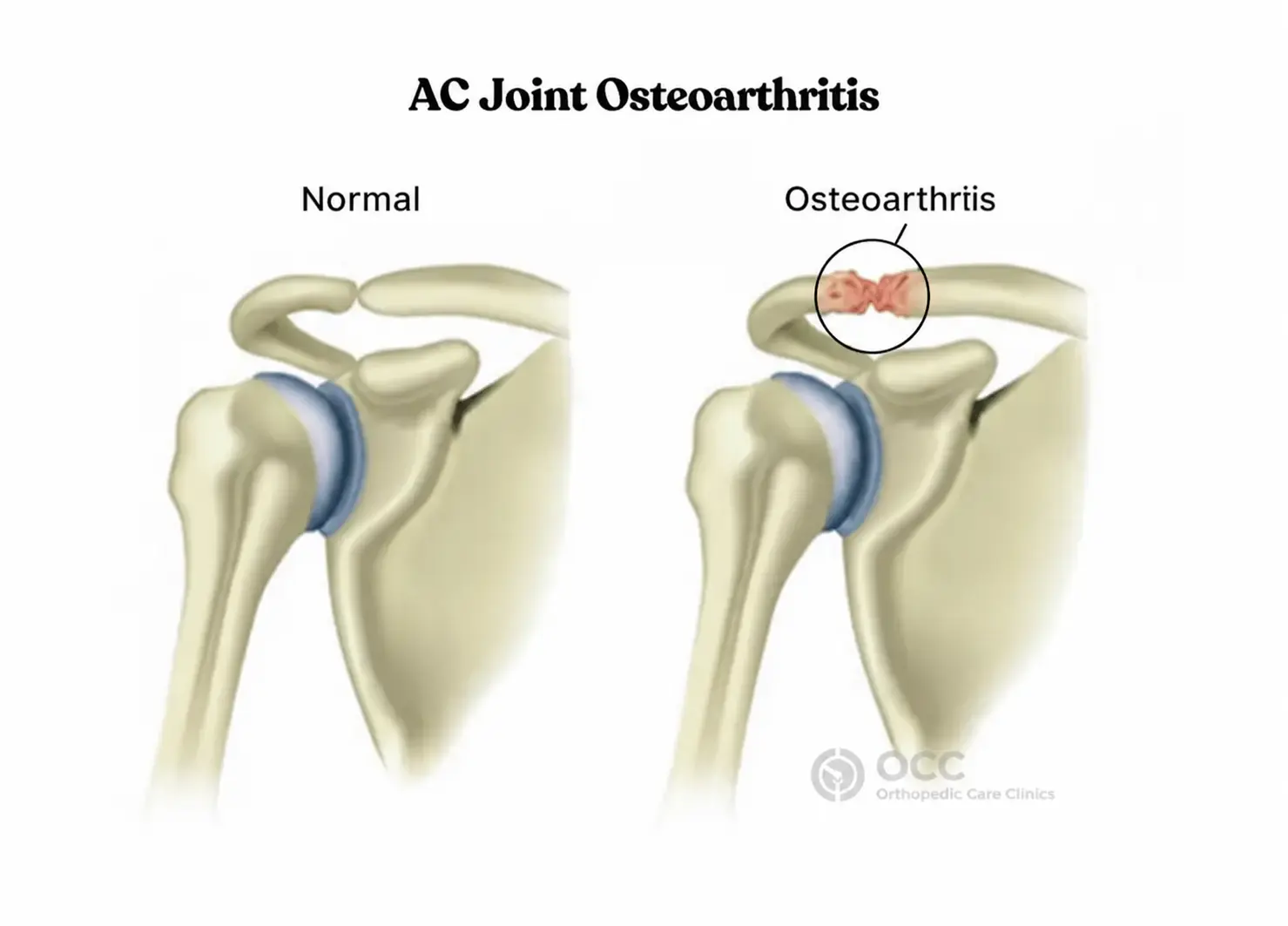
AC joint arthritis, also called AC joint osteoarthritis, affects the small joint where the collarbone meets the top of the shoulder blade. It can cause pain when moving or lifting your arm, or when lying on the affected shoulder.
For more information about AC joint problems, read the Johns Hopkins Medicine overview.
Do you have shoulder pain or other musculoskeletal problems? You are welcome at our clinic in Amsterdam. We can assess your symptoms and discuss which treatment options may be suitable for you.
On this page, you can learn about AC joint osteoarthritis and the treatment options discussed at Orthopedic Care Clinics (OCC).
Treatment for AC Joint Arthritis
The acromioclavicular (AC) joint is where the collarbone meets the acromion at the top of the shoulder. In osteoarthritis, the cartilage in this joint gradually wears down.
AC joint arthritis may be associated with age-related changes, repeated strain or a previous shoulder injury. Treatment usually starts without surgery.
If symptoms remain troublesome despite non-surgical treatment, your orthopaedic surgeon may discuss whether an operation is appropriate.
What is AC joint arthritis?
AC joint arthritis is osteoarthritis of the small joint between the collarbone and the top of the shoulder blade. Changes in the cartilage and surrounding bone can make the joint painful, particularly during certain shoulder movements.
What causes AC joint arthritis?
- Age-related wear of the joint.
- Repeated strain, such as frequent overhead movements or heavy lifting.
- A previous injury to the shoulder or collarbone.
What are the symptoms?
- Pain at the top of the shoulder, especially when lifting or reaching overhead.
- Pain when lying on the affected shoulder.
- Tenderness, swelling or a noticeable prominence over the joint.
- Shoulder movement that feels limited because of pain.
- Sometimes a clicking or grinding sensation.
How is AC joint arthritis diagnosed?
Your specialist will consider your symptoms and examine your shoulder. Depending on your situation, further assessment may include:
- X-rays to look for changes in the AC joint.
- Ultrasound if other shoulder tissues also need to be assessed.
- In some cases, an injection with local anaesthetic to help determine whether the AC joint is the source of the pain.
What treatments are available?
Without surgery:
- Pain relief, such as paracetamol or an anti-inflammatory medicine, if suitable for you.
- Physiotherapy to support movement and shoulder strength.
- In selected cases, an injection into the AC joint.
With surgery:
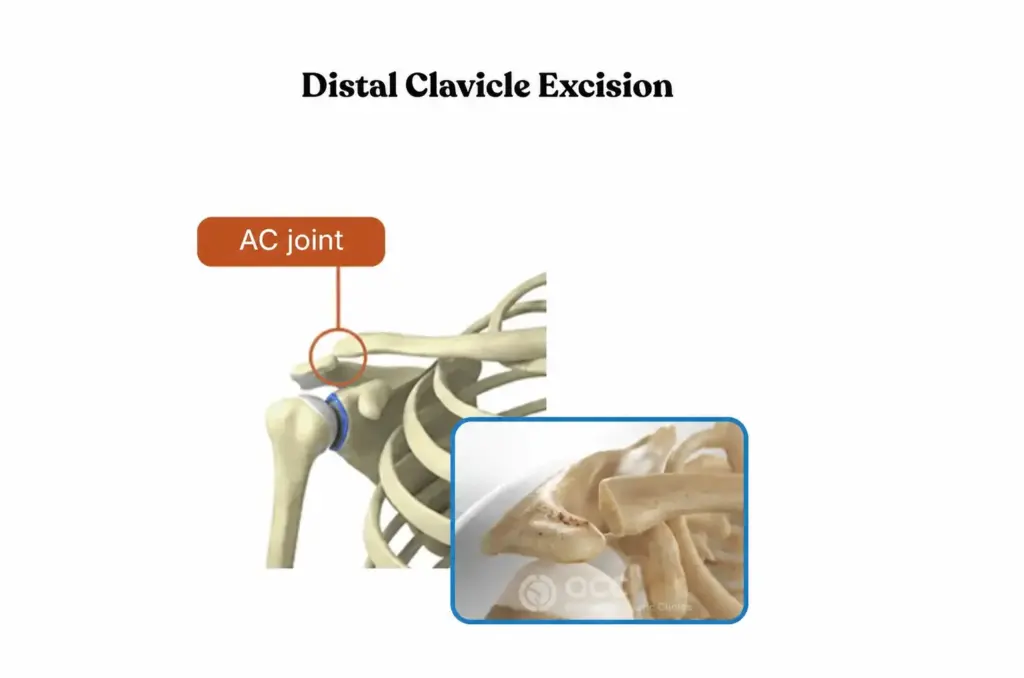
If symptoms persist despite non-surgical treatment, your orthopaedic surgeon may discuss distal clavicle excision with you.
What is distal clavicle excision?
Distal clavicle excision, also called lateral clavicle resection, is an operation in which a small section of the outer end of the collarbone is removed. This creates more space at the painful AC joint.
The operation may reduce pain and improve shoulder movement. Your surgeon will discuss the expected benefits and limitations for your situation.
What is recovery like?
After the operation, you may be given a sling for comfort. Follow your surgeon’s instructions on how long to wear it. Exercises and a gradual return to activity are usually part of recovery.
The operation is generally performed as a day procedure. A follow-up appointment is usually planned after approximately two weeks.
Recovery often takes around 6 to 12 weeks, although this varies between patients. Your surgeon will advise you when to resume work, sport and heavier activities.
What are the possible risks?
As with any operation, complications are possible. These may include:
- Infection.
- Bleeding after surgery.
- Shoulder stiffness.
- Recovery taking longer than expected.
Your surgeon will explain the risks that are relevant to you before treatment.
When should you contact us?
After surgery, contact your treating team if you develop a fever, particularly a temperature above 38.5°C, fluid or discharge from the wound, increasing redness or pain, or if you are concerned about your recovery.
Orthopaedic Specialist
Frequently Asked Questions About AC Joint Arthritis
Does AC joint osteoarthritis go away on its own?
When is surgery considered?
Surgery may be considered if symptoms continue to affect you despite non-surgical treatment. Your orthopaedic surgeon will discuss whether it is suitable for you.
How long does recovery take?
Recovery after surgery often takes around 6 to 12 weeks, but the time needed varies. Follow the individual plan provided by your treating team.
Will I be able to use my shoulder normally again?
Many patients regain good shoulder function after recovery, but results vary. Your specialist can explain what you may expect in your situation..
Our Location
Orthopedic Care Clinics is based in Amsterdam. Our clinic is easy to reach, and we aim to offer timely access to orthopaedic care.
We offer a modern, comfortable setting where experienced specialists provide care. Personal attention and clear communication are central to our approach.
View our location on Google Maps:
View our location on Google Maps
Do you have joint pain or other musculoskeletal problems? You are welcome at our clinic. We would be happy to assess your symptoms and discuss the next steps.